
1.1.6 Understand consequences
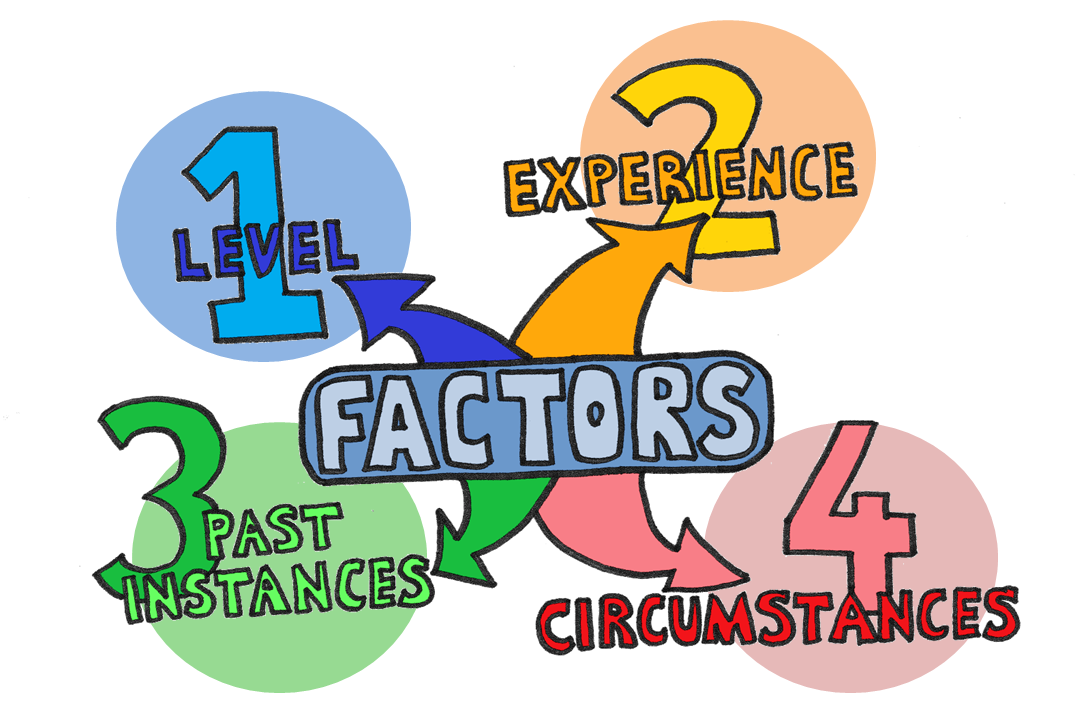
There are four main factors that contribute to the consequences for academic misconduct.
Click on each image to find out more about how each of these factors is taken into account when determining the consequences of academic misconduct.

-

Level
How serious is it? The University classifies plagiarism under four levels in the Policy: Student Academic Integrity (5.1 to 5.5)
Level One Violations usually occur because of inexperience or lack of student knowledge of the principles and requirements of academic integrity. Examples include: inadequate or inconsistent referencing; poor use of citations; poor paraphrasing.
Level Two Violations are characterised by dishonesty and includes things like: quoting directly or paraphrasing to a moderate extent without acknowledging the source; submitting the same work or major portions thereof to satisfy the requirements of more than one unit without permission from the lecturer (self-plagiarism); receiving assistance from others without acknowledging such assistance.
Level Three Violations include dishonesty that affects a major or essential portion of work done to meet course requirements. Examples of Level Three Violations are: cheating in exams; using a purchased essay; using unethical or improper means of acquiring data.
Level Four Violations are the most serious breaches of academic integrity and may involve or resemble criminal activity such as: forging a grade form; stealing an exam; purchasing an exam, essay or other piece of work; having a substitute take an exam or taking an exam for someone else; sabotaging another student's work through actions designed to prevent the student from successfully completing an assignment.
-
Experience
How much experience do you have at university?
The consequences will be different depending on how long you have been at university, and whether you are a first-year student, an upper-level student, or a postgraduate student.
Any instance of violation of academic integrity in graduate or postgraduate work is, at the University's complete discretion, an automatic Level Four Violation.
-
Past Instances
Have you ever done it before?
Repeat violations of academic integrity will result in a higher violation level which have more severe penalties. For example, a student who has repeated Level One Violations may receive a Level Two Violation, repeated Level Two Violations are likely to receive a Level Three Violation, and repeated Level Three Violations are likely to receive a Level Four Violation.
-
Circumstances
Were there other factors involved?
There are different mitigating circumstances which may be taken into account when determining the appropriate penalty for an instance of academic misconduct. These may include things such as:
- differing educational, cultural or linguistic backgrounds of beginning students, or
- medical or personal circumstances that may have impacted on the student at the time the academic misconduct occurred.
Connect with Notre Dame on Social Media
Australia
Fremantle
Broome
Sydney