More than 160 Doctor of Medicine students from the University of Notre Dame Australia will travel to Lithgow later this month to take part in the University’s annual Rural Trauma Training Week, an immersive program designed to prepare future doctors for the realities of practising medicine in rural and remote communities.
Running from 18 to 21 August 2026, the initiative hosted by Notre Dame's Lithgow Rural Clinical School forms part of the University’s ongoing commitment to strengthening Australia's rural health workforce by providing students with hands-on experience in regional healthcare settings.
The four-day program will see second-year medical students from Notre Dame's Sydney campus undertake intensive training focused on the assessment and management of trauma, with a particular emphasis on emergency situations that occur in rural areas where resources and access to care may be limited.
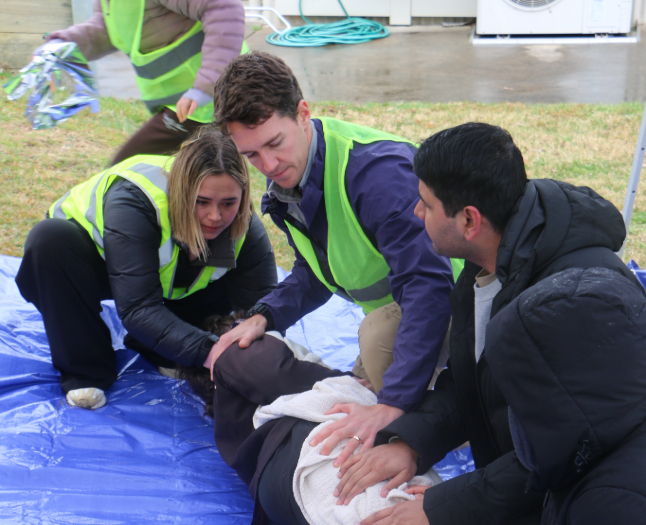
Through a combination of lectures, simulation-based learning and practical exercises, students will develop essential clinical skills while gaining a deeper understanding of the teamwork, communication and adaptability required in rural healthcare.
One of the highlights of the week will be large-scale simulated rescue scenarios delivered in partnership with local emergency services, including VRA Rescue NSW. Local students from La Salle Academy will volunteer as mock patients, helping create realistic emergency situations involving vehicle accidents and trauma incidents.
Students will work alongside healthcare professionals, educators, NSW Ambulance Service, St Johns Ambulance NSW, volunteers and alumni, reinforcing the importance of interprofessional collaboration in delivering quality patient care.
Dean of Medicine, Professor Rebecca Anglin, said exposure to rural healthcare was critical in shaping the next generation of doctors.
"Programs like Rural Trauma Training Week provide students with invaluable opportunities to build clinical confidence while gaining a firsthand understanding of the unique challenges faced by rural and remote communities," Professor Anglin said.
"By immersing students in realistic emergency scenarios and working alongside members of the local community and emergency services, they develop the skills, resilience and teamwork needed to deliver high-quality care in a range of healthcare settings. Experiences like this can also inspire students to consider rewarding careers in regional and remote medicine."
Professor Anglin said the program offered a unique opportunity for students to learn beyond the traditional classroom environment.
"It is wonderful to see students work alongside other health professionals and community volunteers while developing a greater appreciation of the collaborative approach needed to provide excellent patient care in rural settings," Professor Anglin said.
Rural Trauma Training Week forms part of Notre Dame's commitment to improving health outcomes for regional communities by encouraging and supporting future healthcare professionals to pursue careers outside metropolitan centres.
By connecting students with rural communities and providing practical, real-world learning experiences, the program helps build a stronger pipeline of healthcare professionals equipped to meet the needs of regional and remote Australia.
Media Contact: media@nd.edu.au