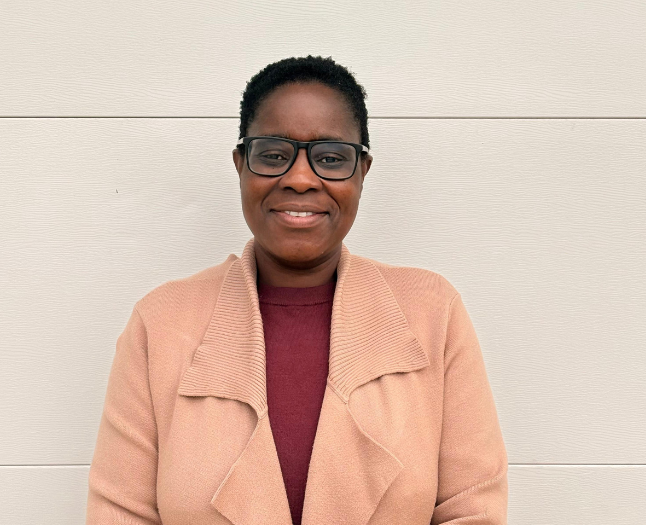
A recent study co-authored by University of Notre Dame Australia researcher Dr Nhlanhla Mpofu has found that children learning English can benefit significantly when teachers incorporate their home language into classroom learning, challenging the longstanding assumption that English-only instruction delivers the best results.
The research, conducted in Namibia, found that drawing on learners' home languages helped students develop stronger reading comprehension skills and supported their English language development. The findings suggest multilingual learners do not need to leave their first language behind to succeed academically in English.
Dr Mpofu, recently appointed National Program Coordinator of UniPath at Notre Dame, has spent more than a decade researching how children learn English in multilingual settings, particularly across South Africa and Namibia.
Her work focuses on literacy, reading comprehension, teacher development and the teaching of English as an additional language.
Dr Mpofu said many people assume the best way to learn English is through English-only teaching.
"Our research shows that when teachers draw on students' home languages, children are better able to understand what they read, connect new concepts to existing knowledge and build stronger literacy skills,” she said.
“Rather than being a barrier, a child's first language can be a powerful resource for learning."
While her research has been conducted largely in African contexts, Dr Mpofu believes many of the insights are relevant to Australia as schools seek to improve literacy outcomes and better support students from diverse backgrounds.
"Multilingualism should be viewed as an educational strength rather than a challenge,” she said.
Media Contact: media@nd.edu.au