
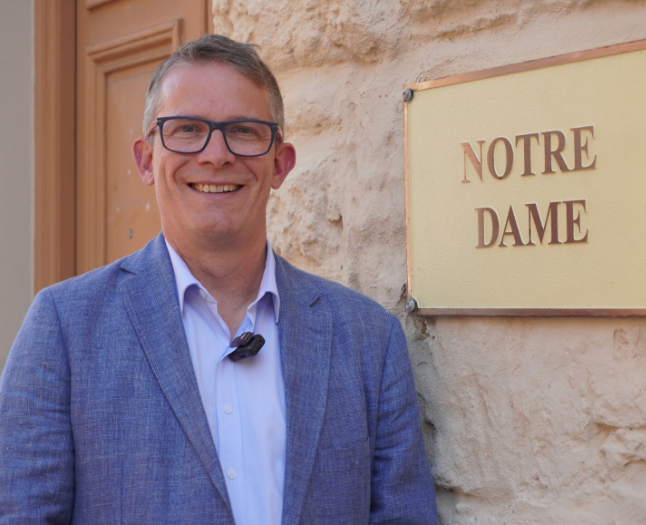
University of Notre Dame Australia researcher Piers Truter is helping transform how West Australians access urgent healthcare, improving patient outcomes while reducing pressure on busy emergency departments.
A clinician researcher in the School of Health Sciences, Dr Truter is leading work to redesign care systems, so patients receive faster, more targeted treatment, particularly for common musculoskeletal conditions such as fractures, sprains and back pain.
“The public health system is a vital part of Australian society, but it operates within a finite budget,” Dr Truter said.
“It’s essential we design services that remain accessible, high quality and truly patient-centred.”
During his PhD, Dr Truter secured more than $1 million in funding to develop innovative care models at Fiona Stanley Hospital, including a Virtual Fracture Clinic and a physiotherapist-led emergency department diversion service.
Collectively, these programs have supported more than 20,000 WA patients, reducing wait times and improving satisfaction.
His research has shown that directing patients with musculoskeletal injuries to specialised physiotherapy-led care can ease demand on emergency departments while improving the patient experience.
The approach is now drawing interest from other hospitals across Australia looking for ways to manage growing demand.
“We’re seeing that when patients receive the right care, from the right clinician, at the right time, outcomes improve for both the individual and the health system,” he said.
Dr Truter said his research was inspired by his frontline experience in emergency departments, where he identified opportunities to better align care with current evidence and improve patient pathways.
“Research is an important part of addressing the challenges facing our health system and evaluating new solutions, treatments and models of care,” he said.
Now a Raine Clinician Research Fellow, Dr Truter is leading the FOCUS Study, which will explore a new digital fracture care pathway using mobile technology to improve access, coordination and recovery outcomes.
“Ultimately, I want to see a public health system where patients have easy, direct access to specialist care and where the value of interactions and not just volume, defines success,” he said.
Media Contact: media@nd.edu.au