Woodlands Case Study
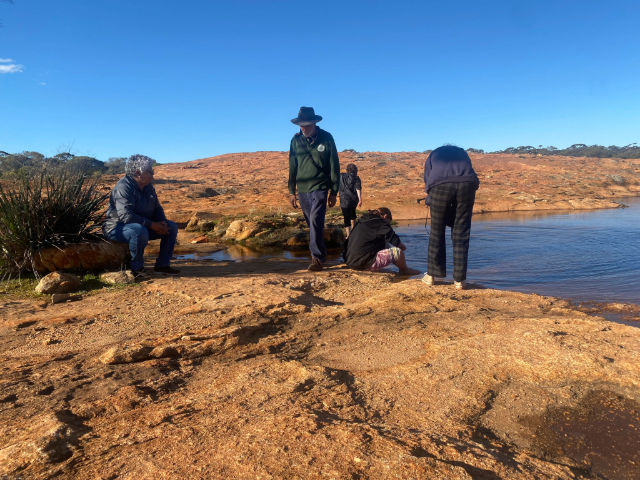
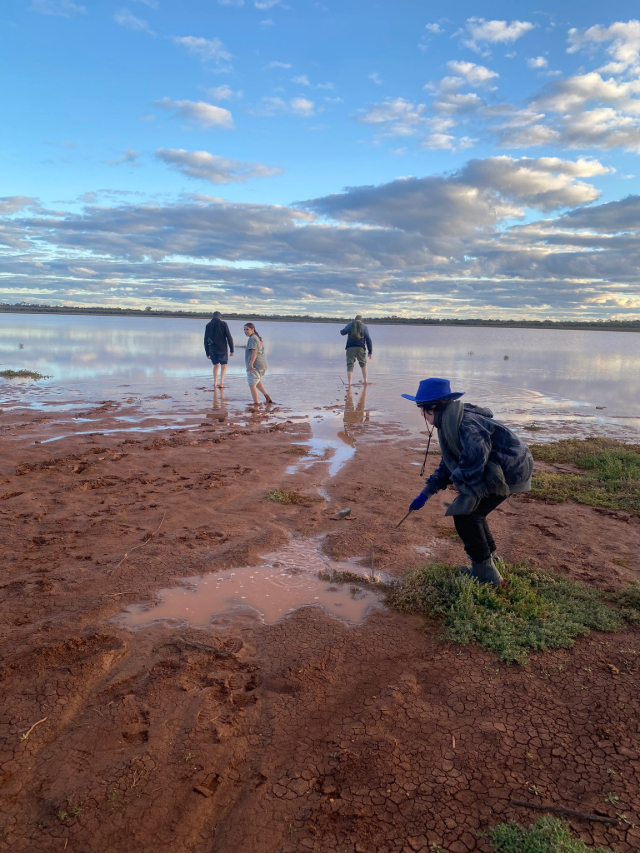
The Great Western Woodlands case study is the Aboriginal-led project, Kids on Country. With facilitation by Catrina Aniere of Millennium Kids, this project has been reconnecting young people with their environmental-cultural homelands for more than ten years. The Elders lead excursions on Country for the young people who listen to stories and play, run, explore, and might paint, draw or do other creative activities. Led by Kalamaia Kaprun cultural custodians Ms Betty Logan and Ms Maxine Dimer, the young people are immersed in language and culture, and growing up feeling connected to their families, Elders and Woodlands, and are keen to continue this cultural learning.
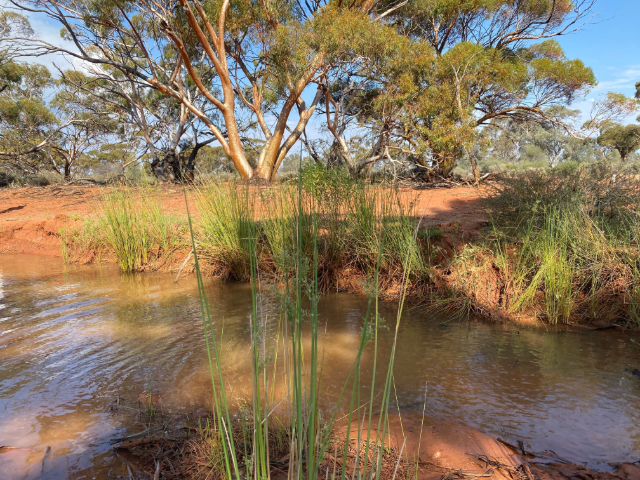
In the Great Western Woodlands, some year-round wetlands are beginning to dry out at times, depleting the landscape of a precious resource. Water is precious.
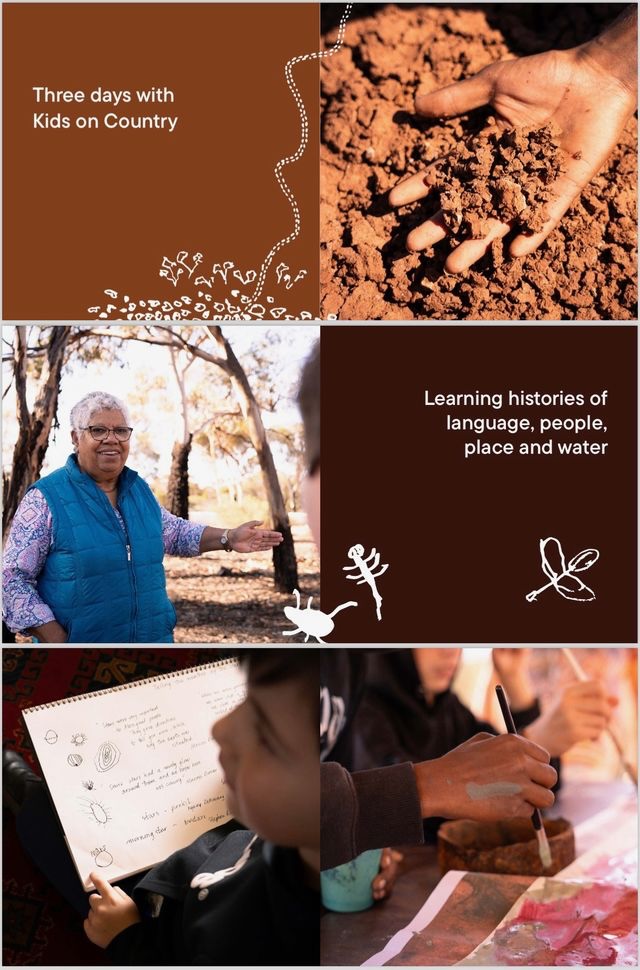
Kids on Country: Great Western Woodlands. March, 2024. Photographer and Media: Kammi Rapsey.
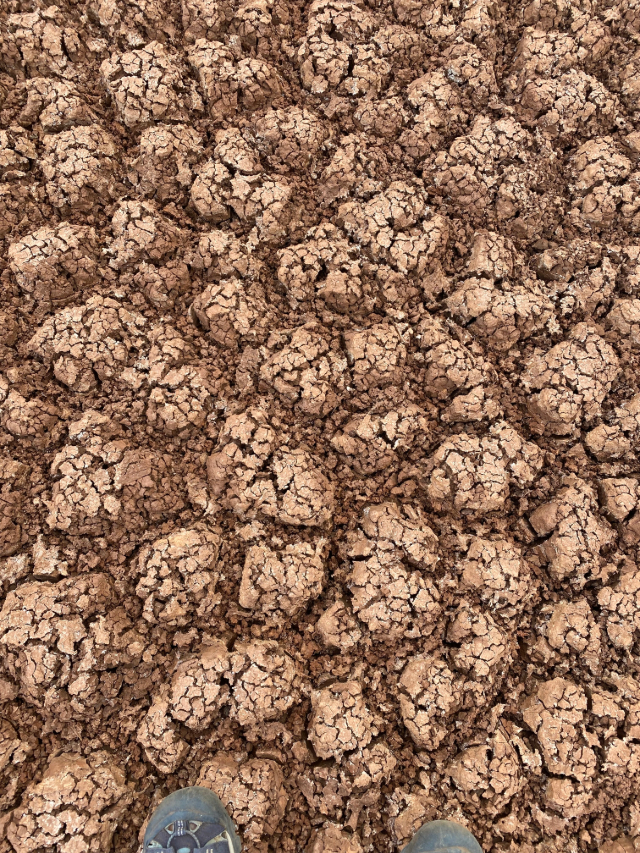
Cracked Earth.
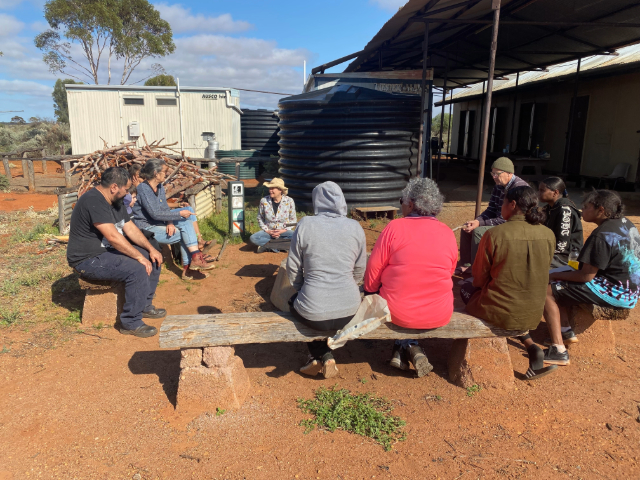
Meeting at Credo Station Outside the Shearer’s Quarters, Great Western Woodlands. March, 2024.
In the Great Western Woodlands case-study, three young women who are long-term Kids on Country participants, work as research assistants. In this picture they are talking with the research team. Supported by cultural custodians Betty Logan and Maxine Dimer, the research team and young people visit various places in the Great Western Woodlands, to attend to intergenerational cultural knowledge transfer with a particular focus on water and cultural water knowledge. During the March 2024 research visit, the Rowles Lagoon had dried out, the first time in living memory for Maxine. Similarly, there was only salty water in the tanks at the station (pictured). One of the researchers, freshwater ecologist Pierre Horwitz, and Elder Maxine Dimer, led walks to map the waterways and talk with the young people about two-way science.
The Great Western Woodlands research team and Elders are deeply interested in precious freshwater, and cultural and historic knowledge relating to it. In the 1950s when the cultural custodians were young children, there were big floods in the area. There are many water stories about these times, including the stories of what the children of Credo in early days called ‘tree fish’. Tree fish? These are lizards, goannas and other animals that climb trees to escape from the flood. They make good food for people, particularly in the absence of normal hunting and station activities because of the floods.
Connect with Notre Dame on Social Media
Australia
Fremantle
Broome
Sydney